
 A “V-shaped” recovery from this pandemic of ours is pretty hard to envision. Such has been the economic unraveling, the devastated infrastructure, the human toll of the “fastest economic contraction in three hundred years” — some say it will take years to recover. At best, they say, the recovery will be “U-shaped.”
Then there are those who foresee a “W-shaped recovery”: there will be a quick unsustained rebound. But it will be followed by another precipitous downturn.
On a “happier” note, some posit an “L-shaped recovery”: this present downturn is “the new normal.” So we don’t have to worry about returning to pre-Corona normal because “normal never was.” That pre-Covid19 messed-up world was anything but normal. And we are not going back.
In Alberta, they pose this question in winter terms — in keeping with one of Canada’s finest wonderlands. Is the Corona Virus (1) a blizzard, (2) a bad winter, or (3) an Ice Age?
Still, there’s something about a “V-shaped recovery” that I like. It was first suggested to me by a neighbour, Mphonyani, who said, “This thing will be gone from here in two months.” Spoken like one whose people have survived so many invasive pandemics that CV was just another hardship which had “come to pass!”
Then I picked up a forecast from the Bank of England’s Governor, Andrew Bailey: yes, we are in a recession, but “it could end almost as rapidly as it started, with a huge rise as the economy is put back to work going into next year.” This hinges on “a gradual lifting of the lockdown, starting next month, and no second wave of the pandemic.”
On a similar note, global investor Barry Sternlicht told CNBC recently that he expects the economy to mount a fast recovery once the worst of the coronavirus outbreak is over. Although “we’re going through the floor” at the moment, and “this is a global 9/11 in travel and hospitality,” a V-shaped bounce back is likely. “This will be even faster than 2008.”
The thing that attracted me the most to this idea of a speedy recovery was the connection to Easter Sunday. I mean, we were actually celebrating the resurrection of our Lord at the very time the pandemic was taking hold. And if ever there was a “V-shaped recovery,” it was the resurrection of Jesus! He went down into the grave on Good Friday, “delivered by the determinate counsel of God… by wicked hands crucified and slain.” And he rose up from the grave on the first day of the next week! Three days in the tomb! “Death could not hold him prey!”
Oh, that fabulous resurrection of our Lord — it was so dramatic. Not just because of those awesome appearances over forty days — coming into locked rooms, meeting despondent followers along the shore, walking into the sunset with the two travellers whose hopes were fading fast — but because of the implications for us all. “But now is Christ risen… the first fruits of those that have fallen asleep!” This means that our own resurrection is tied to His! “For the trumpet shall sound, and the dead shall be raised incorruptible, and we shall be changed… O grave, where is thy victory?”
Thus, I don’t find a rapid V-shaped recovery from this terrible blight that hard to foresee. Once the resurrection of Christ captures your vision, hardly any recovery seems out of the question. Indeed, when resurrection life indwells you, your entire existence becomes a V-shaped recovery! In the words of the apostle, “If the same spirit that raised up Christ from the dead dwells in you, he will give life to your mortal body by that same spirit!” Wonderful.
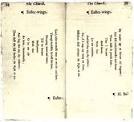
In sum, who knows what shape our future downtimes and recoveries will take? But whatever befalls, we can face the future with the greatest assurance. George Herbert’s “Easter Wings” was written in the plague-ridden 17th Century. Yet it is so timeless, with its beautiful expression of our ever-living Easter faith. Fittingly enough, the poem actually contains a “V-shape!”
“Lord, Who createdst man in wealth and store,
Though foolishly he lost the same,
Decaying more and more,
Till he became
Most poore:
With Thee
O let me rise,
As larks, harmoniously,
And sing this day Thy victories:
Then shall the fall further the flight in me.
“My tender age in sorrow did beginne;
And still with sicknesses and shame
Thou didst so punish sinne,
That I became
Most thinne.
With Thee
Let me combine,
And feel this day Thy victorie;
For, if I imp my wing on Thine,
Affliction shall advance the flight in me. (GH, 1633).
 JCK-at-large SITE
Leave a comment